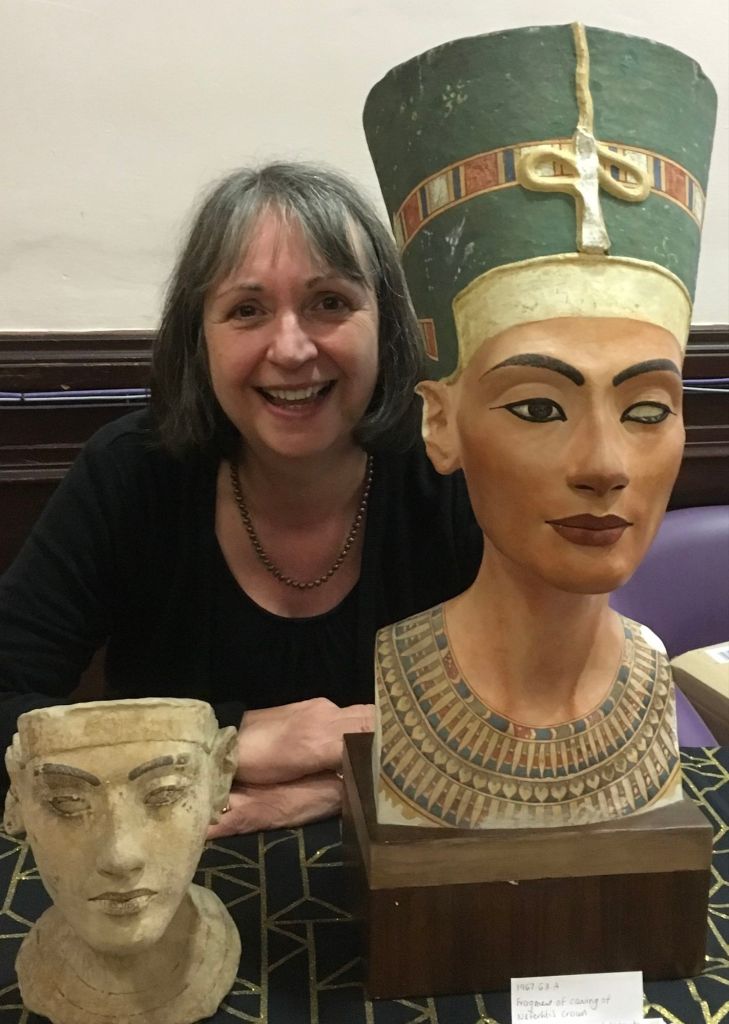
TGN: You were born in Lancashire, UK. What types of games did you play growing up, and what were some other popular games played amongst other people in your region of the UK, in the 1960s-’70s?
JT: When I was growing up there was no internet and very little television; everything had to be played face-to-face. I enjoyed playing board games such as ludo, chess and draughts/chequers with my family. As school, girls spent a lot of time playing skipping games and boys played football (soccer in the USA). Boys and girls did not play together. When I was older, I liked to play cards with my friends.
TGN: When did you first become interested in archeology?
JT: My hometown, Bolton, has a large museum full of ancient artefacts. I visited it regularly as a child, and this developed my interest in archeology and the ancient world. I always wanted to know how the people of the past lived.
TGN: What sparked your interest in ancient Egypt?
JT: When I was 12 years old, the touring exhibition of Tutankhamun artefacts came to London. My school booked train tickets, and we all went to London for the day. This was my first visit to London! My class did not actually get to see the exhibition because the queues at the British Museum were just too long and we could not risk missing the train home. But my interest in ancient Egypt had been sparked, and has never disappeared.
TGN: What are some of the board games that were played in ancient Egypt?
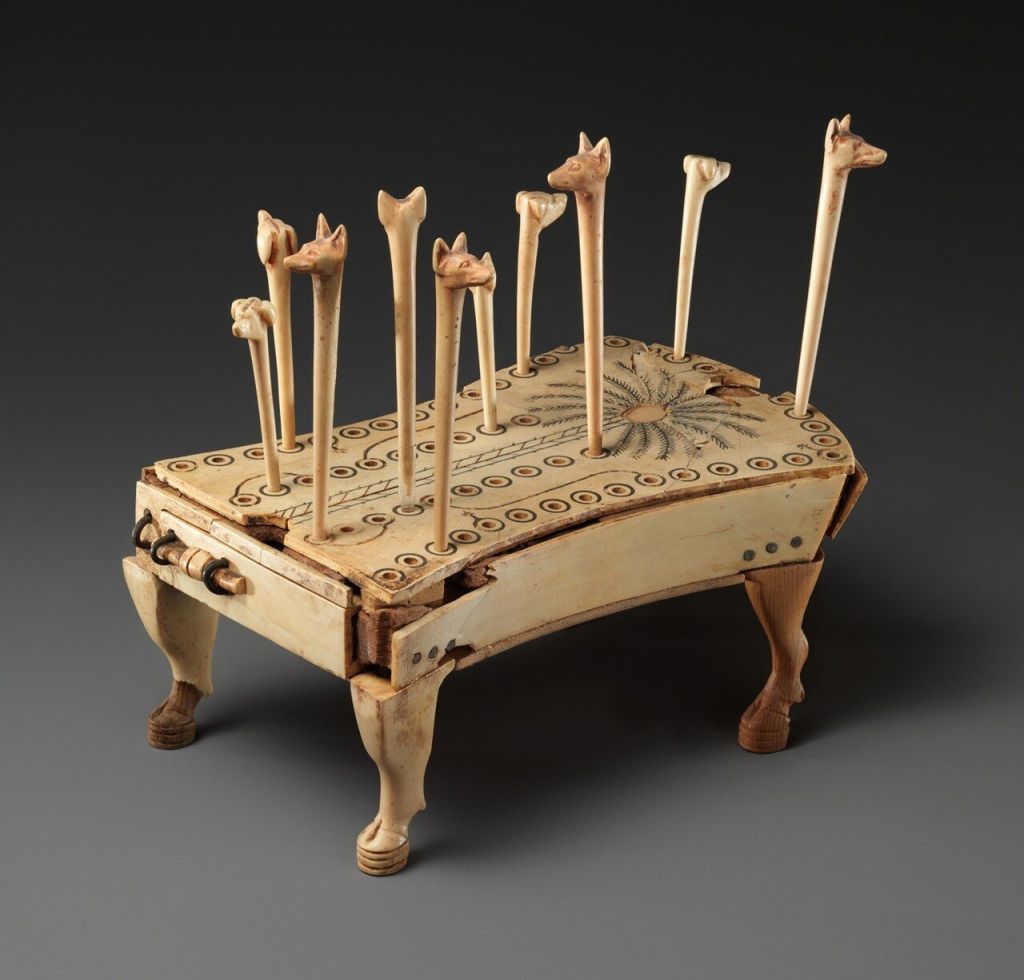
JT: The ancient Egyptians enjoyed a variety of strategy board games, including Senet, Mehen, Twenty Squares (a Near Eastern board game imported into Egypt), Men (a game for two players: each had five pieces that they raced along the board) and Dogs and Jackals (a variant of men, using pegs rather than playing pieces).
TGN: What is the game Senet?
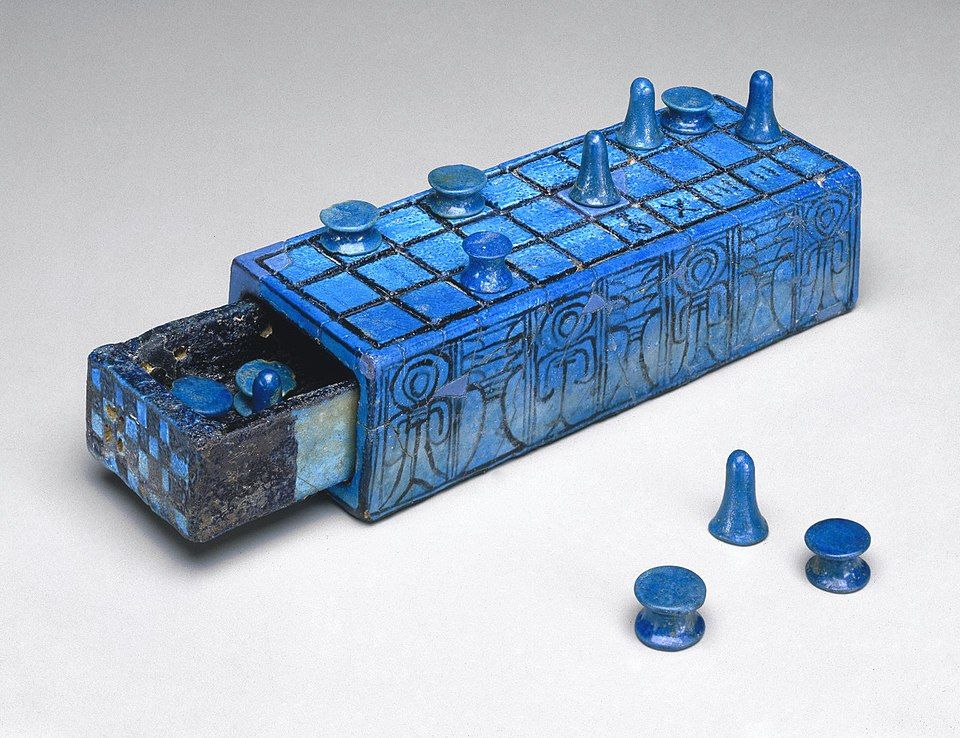
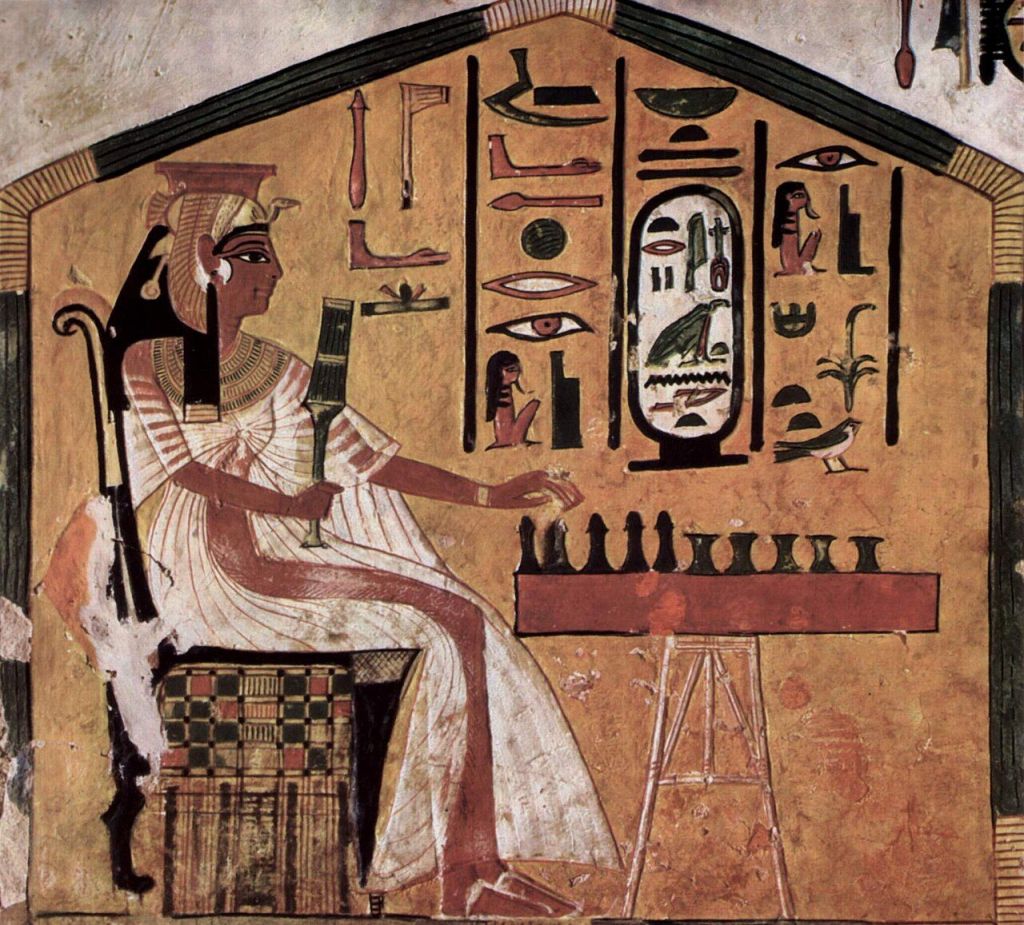
JT: Senet, also known as “The Passing Game” was ancient Egypt’s most popular board game. It was a bit like modern backgammon. It was a two-person game played on a rectangular board inscribed with three parallel rows of ten squares or “houses”. Illustrations on tomb walls show that each player had either seven or five playing pieces known as “dancers”; either tall cone-shaped pieces or short reel-shaped pieces. The object of the game was to guide all the dancers through all the houses, reversing direction on every row, and blocking, diverting and passing over the opponent’s pieces wherever possible. Occasional inscribed houses – the ancient equivalent of the “snakes” and “ladders” in our modern game – made the journey around the board more exciting.
TGN: What is the game Mehen?
JT: Mehen, or “The Snake Game” was popular at the start of the dynastic age (3100 BCE) but then disappeared. It was played on a circular board whose upper surface was shaped like a coiled snake with scale-like slots carved along its back. There was no standard number of slots and no specific direction of play; both clockwise and counter-clockwise boards are known. The object of the game was to race a token or tokens around the snake working from the tail to the head, with moves being determined either by throwing sticks, or by guessing the number of marbles held in an opponent’s hand
TGN: What archaeological sites have there been found examples of these board games?
JT: Almost all the board games been found in tombs. Illustrations of gaming boards and pieces are also found on tomb and temple walls. It seems that the ancient Egyptians expected to play games in the Afterlife.
TGN: Do historians and archeologists know how most of these ancient games were played? Were there Hieroglyphic or Greek writings that mentioned these games or their rules, or are modern reconstructions mostly educated guesses?
JT: Unfortunately, we don’t have the rules for any of these games: we have had to try to work out how they were played. Over the years many Egyptologists and games experts have devised rules for playing Senet, the best being developed by experts T. Kendall, R.C. Bell and, most recently, P. Piccione.
TGN: What type of physical (sports) games were played in ancient Egypt?
JT: It is very difficult to know exactly what physical games were played in ancient Egypt, as these leave little trace in the archeological record. There is no evidence for sports stadia and no evidence for formal team games. Some sports are depicted on tomb and temple walls: these are almost certainly religious rituals, rather than leisure activities. They include ball games (including juggling), dancing and acrobatics performed by girls, and jumping games and tests of balance performed by boys. A festival known as the heb-sed required the king (or a substitute) to run a set distance after thirty years on the throne and every three years after that, to prove that he was still fit enough to rule Egypt. I am not sure that we can call this a game though: it was a serious matter!
TGN: Is there any evidence to suggest certain games were played by or restricted to certain age groups, or even games that were restricted to certain social classes?
JT: The board games played in ancient Egypt seem to have been played by all classes with, as far as we can tell, no age or gender restrictions. However, the elite were able to invest in expensive boards and gaming pieces, while the poorer people (most of the population) scratched their game boards into mud or sand or drew them onto stone flakes, and used pebbles as gaming pieces.
TGN: Is there any evidence to suggest any pharaohs played games during their rule?
JT: I am sure that they did. The best evidence for this comes from Tutankhamun’s grave. He is the only king to have been discovered in his own near-intact tomb in the Valley of the Kings: his grave goods include Senet boards and pieces, and a board used to play Twenty Squares. We also have images of kings and queens playing board games on tomb and temple walls.
TGN: The Popol Vuh (sacred text of the Maya) speaks of the Mayan ball game, as part of their creation myth. Do any games play a role in ancient Egyptian mythology?
JT: Not directly in mythology. But Senet does seem to have a link with death, life after death and the tomb. The earliest images of Senet appear on tomb walls, where they are included amongst scenes of daily life. Two living opponents play each other while the deceased tomb owner watches. In later dating scenes the tomb owner actually sits at the board and plays a living opponent. During the New Kingdom (from 1550 BCE) the tomb owner plays an invisible opponent who might, perhaps, represent death.
TGN: Have you ever yourself attempted to play any of the modern versions of these games?
JT: I have tried playing the modern version of Senet, but as we don’t have the ancient rules, we cannot be sure that we are playing the game as the ancient Egyptians would have enjoyed it.
TGN: Which period (Kingdom) of ancient Egypt are you most interested in?
JT: That is a really difficult question, as they are all fascinating. I particularly like the very early time, when the independent city-states in the Nile Valley and Delta were stating to form into one united land ruled by one king (approximately 3100 BCE) and I also like the New Kingdom (1550-1069 BCE) which has left far more written evidence. It is in the New Kingdom that we meet some of ancient Egypt’s most vibrant personalities including the Pharaohs Akhenaten and Ramses II, and the queens Hatshepsut and Nefertiti.
TGN: What kind of games do you enjoy?
JT: I like playing single player card games such as Solitaire (known as Patience in the UK), either using physical pack of cards or on the computer. I am really bad at playing chess, though I quite enjoy it.
 TheGameNarrative